#ShutItDown: Organizing to Strike for Climate Justice

cross-posted from Medium

by Patrick Young

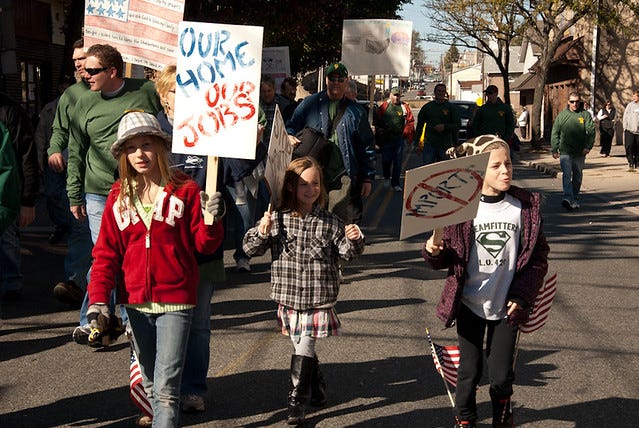
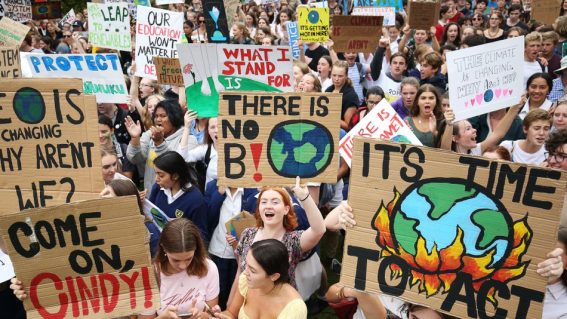
Throughout the 2018–2019 school year, young people around organized massive school climate strikes to demand that the world’s leaders take immediate action to address climate change. The strikes started first in Sweden, then spread throughout the European Union and around the world. By March, 15 tens of thousands of students in more than 100 countries around the world walked out of school as part of the first Global Climate Strike for Our Future issuing a strong challenge to the world’s leaders. Greta Thunberg, one of the strike’s leaders wrote in an open letter in the Guardian,

“We, the young, are deeply concerned about our future… We will no longer accept this injustice… We demand the world’s decision-makers take responsibility and solve this crisis. You have failed us in the past. If you continue failing in the future, we, the young people, will make change happen by ourselves. The youth of this world has started to move and we will not rest again.”

Inspired by these bold youth-led actions and motivated by the increasing urgency of the climate crisis, others in the climate movement have issued calls for climate strikes starting as soon as September of 2019. Starting on September 20, the students who have been organizing the weekly climate strikes are launching a major strike and week of actions. Then starting on September 27th, Earth Strike is calling for a general strike demanding immediate climate action from governments and corporations worldwide. WeRise2020, a widespread network of climate action groups across Europe is planning on mobilizing alongside EarthStrike starting on September 27th for four to six weeks of escalated actions before pausing to regroup for another wave of action.

These calls for climate strikes offer an inspiring vision for action at the scale and scope needed to disrupt the entrenched power structures that have created the climate crisis and continually blocked the serious measures needed to combat it. But beyond calls to walk out of school and work, truly effective climate strikes will require a strategy for mass participation and disruption to seriously threaten the entrenched power structures. It won’t be easy but by drawing on the lessons from previous mass strikes and tested organizing principles we believe that it is possible to build mass climate strikes that can offer a credible threat to the governments and corporations that have failed to address the climate crisis.

Strikes — A powerful tool in the toolbox

The term “strike” comes from a maritime tradition of workplace action where sailors would lower or “strike” the sails of their ship at sea demanding better treatment and working conditions from the ship’s captain and officers. Sailors would refuse to raise the sails and the ship would stay adrift until their demands were met, or at least an acceptable agreement had been reached. There was an art to organizing these early strikes. A large enough portion of the crew needed to be ready to take action so that they couldn’t be overpowered by the officers and loyal crew members. And the strikes were most effective when winds were high and the cost of lowering sails was greatest. If the strike failed the consequences to the unlucky sailors who overplayed their hands would be great. And ship captains knew that if the unrest was not addressed quickly it could escalate to a full blown mutiny.

Strikes moved ashore in the early 1600s with relatively small groups of indentured servants, slaves, apprentices, and craftspeople laying down their tools and refusing to work to demand better working conditions. While workers from all walks of life participated in different forms of strikes, skilled craft workers whose skills could not easily be replaced won the biggest gains during these early work stoppages. But as the industrial revolution and the introduction of steam-powered railroads transformed the organization of the economy, larger groups of unskilled industrial workers gained the ability to cause mass disruption by idling the factories and infrastructure that early industrialists relied upon to make their fortunes.

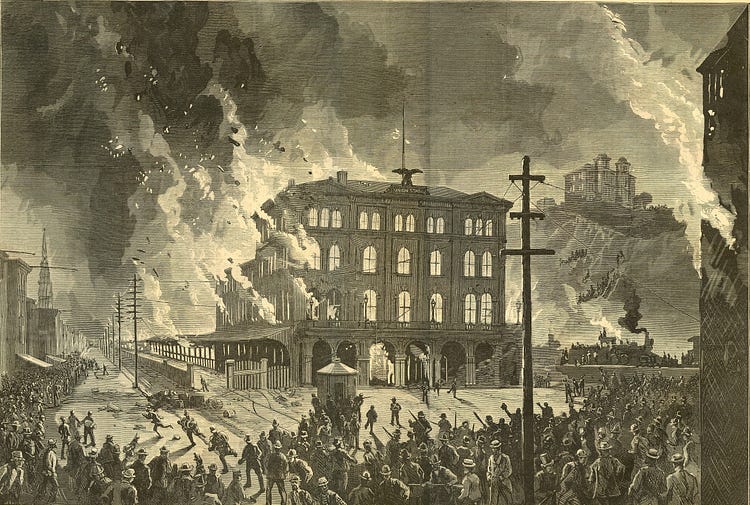
In 1877 workers on the Baltimore & Ohio Railroad (B&O) went on strike to protest wage cuts, choking the nation’s arteries and cutting off the lifeblood of the country’s commercial and industrial systems. The strike started in Martinsburg, West Virginia before spreading to Baltimore, Pittsburgh, Philadelphia and as far west as St. Louis, Missouri and as far north as Albany, New York. Thousands of railroad workers took part in the strike but its effects were much more widespread because the stalled rail line blocked factories from getting supplies or transporting their goods to market and brought passenger travel to a standstill effectively shutting down a large portion of the commercial and industrial activity in the country.
Later, in 1934 when Longshore workers in San Francisco and Teamsters in Minneapolis commercial activity in both cities ground to a halt. With the docks in Seattle’s ports effectively shut down and drivers refusing to move struck cargo, all of the businesses that relied on trading and transporting imported and exported goods were shut down. When Seattle’s truck drivers struck, “flying squads” of picketers refused to allow any truck roll through the city’s streets without a special permit from the union (strikers granted special permits to trucks moving supplies for hospitals as well as farmers from the supportive Farmers’ Holiday Association traveling into the city to sell produce in street markets). And as recently as this year, the wave of teachers strikes across the country rippled through entire communities, with parents of school children calling off work to stay home with their children while schools were closed (many parents and students used the time to join their teachers on the picket lines).

Mass Participation and Mass Disruption

Strikes are a very powerful tool, but they aren’t a tool to be used lightly. Strikes are, by their very nature, tools of mass participation. Just a handful of workers walking off the job isn’t likely to have a significant impact on operations. For a strike to be successful at impeding operations, large numbers of workers must be ready to collectively withhold their labor. This requires serious discipline and commitment. The costs of missing work — and a paycheck — can be significant for many workers. And the risks of being fired or retaliated against are serious. So the informed consent and active participation of large numbers of workers — particularly those most implicated in the strike activity — are essential ingredients in organizing a credible strike.

While some moderately successful strikes have been limited to specific workplaces or industries, throughout history, the strikes that have won sweeping societal changes won because they were able to spread throughout the economy, generating popular support, mobilizing mass participation and creating mass disruption. During the railroad strike, a large number of railroad workers walked off the job, refusing to work after management instituted pay cuts. But even more workers didn’t work because the trains were not running. Picketers refused to let trains leave stations or roundhouses, supplies weren’t delivered to factories, and passengers weren’t able to travel to conduct business. In Minneapolis, Teamsters made the decision that allowing any driver to move goods at substandard rates hurt every trucker so flying picket squads refused to let trucks driven by would-be strikebreakers move during the strikes.

Today’s labor strikes are much different than the strikes that led to the massive workplace gains a century ago. Because early strikes proved to be so powerful and disruptive, politicians offered something of a compromise, allowing strikes, but only under certain conditions. Anthropologist David Graeber observes,

“Unions are, paradoxically, the only organizations in the US legally permitted to engage in direct action; but they can do so only if they do not call it that; and only at the cost of accepting endless and intricate regulations over how and when they can strike, what kinds of pickets they can set up and where, whether, they are allowed to engage in other tactics such as secondary boycotts or even publicity campaigning, and so on.”

This uneasy compromise has been the subject of much debate within the labor movement. On one hand, federal labor law has offered some important protections for workers engaging in union activity, on the other hand, the legal framework of the National Labor Relations Act has dramatically constrained the repertoires of contention that are available to modern labor unions.

As a result of this uneasy compromise, the strikes that observers of the modern labor movement are familiar with bear little resemblance to the massively disruptive general strikes that led to the huge gains of the labor movement in the years before 1936. Early strikes relied on two essential components to create mass disruption: First, workers would organize large numbers of their co-workers to withhold their labor for the duration of the strike. Second, those workers and their supporters worked to actively disrupt commercial activity through pickets, blockades, social persuasion, and direct action.

This second, more active, component of early strikes was essential to creating mass disruption because it made the decision of whether or not to strike a collective one, not an individual one. Once workers collectively decided to call a strike, individual workers were no longer forced to make the tough individual decision of defying their employers and refusing to work — factories were inaccessible because their gates were blocked by strong picket lines; trains and trucks would not move because even if there were drivers and rail crews on hand willing to defy the strike, roads and rail lines would be blocked; shops would close partly because even if there were retail clerks ready to show up to work there would be no way to get goods to stock the shelves and customers would be discouraged from shopping.

Today, constrained by the framework of federal labor law, unions generally rely primarily on the more passive component of strikes — withdrawing labor en mass. Popular movement to fight climate change, however, are not bound by the constraints of the uneasy compromise of federal labor law, we are only bound by our ability to build mass participation, create mass disruption and withstand mass repression.

Striking for Climate Justice

The bold and courageous leaders of the student climate strikes captured the imagination of the world by walking out of school, Friday after Friday, eventually mobilizing millions of students in more than 100 countries around the world to take action. They have called for another round of mass strikes in September of 2019 and issued a challenge for older generations to join them.

“Millions of school strikers have shown us they’re serious about climate action. Adults, will you join our youth? School strikers are calling on everyone: young people, parents, workers, and all concerned citizens to join massive climate strikes and a week of actions starting on September 20. People all over the world will use their power to stop ‘business as usual’ in the face of the climate emergency.”

To date, climate strikes have relied mainly on large numbers of students withdrawing their participation in the status quo by walking out of class and joining demonstrations. But this round of climate strikes could truly jump scale and pose a credible threat to the politicians and corporations that have failed to take action on the climate crisis if we are able to combine organizing walkouts at massive scale with active disruptions to bring the economy to a screeching halt.

Building massive support and participation is one essential component of organizing for this September’s climate strike. But planning for mass disruption to actively shut down our political and economic system is what will make the difference between a powerful week of action and a serious challenge to the entrenched power structures.

If our movements can credibly plan to shut down the arteries of commerce and transportation we can transform a climate strike from an individual decision to withhold labor to a collective decision to shut down the economy until our demands are met. If we can ensure that commuter trains cannot run, key bridges are impassible for vehicular traffic, and major highways into commercial centers are blocked people will not be forced to make the tough individual decision about whether or not to go to work — going to work won’t be an option — they’ll be able to decide whether to stay home or to come out to the streets to join the demonstrations.

“But what about people just trying to go about their day? Won’t we just be inconveniencing them?“

To be sure, massive participation and broad popular support is an essential component of a successful climate strike. But if we are serious striking for climate justice we need to be serious about creating mass disruption. If we are going to invite individuals to give up pay, risk their jobs, or leave their classrooms to join a strike, we owe it to them to be serious about making it work. There can be significant personal costs to participating in a strike and strikes aren’t a tactic to call for lightly or to deploy as half measures.

The question of whether or not to organize mass disruption is an important gut-check for our movement. If we don’t think that the situation is urgent enough to warrant creating a mass disruption then the situation probably isn’t urgent enough to encourage large numbers of people to risk their livelihoods by going on strike.

A strike will be disruptive. Some people who want to go to work won’t be able to get to their jobs. Some parents will probably have trouble getting to their kids’ daycare to pick them up. Some people may have trouble getting to the pharmacy to pick up their medicine. Many people will miss paychecks. We can come up with plans to try to mitigate as many of these problems as possible, but if we aren’t ready to try to solve the problem of helping parents get their kids at daycare or finding ways people to get their medicine from the pharmacy, we aren’t ready to invite daycare workers or pharmacy techs to walk off the job.

From Individual Decisions to Collective Action

Organizing mass disruption to the key arteries of the economy also transforms participating in a strike from an individual decision to a collective action. If the strike just relies on individuals making the decision to withhold their labor or walk out of their classrooms, every person who participates in the strike is forced into a situation where they must personally decide whether or not they are going to strike and bear the full weight and responsibility of that decision with their employer or school.

But as the size of the strike grows, the risk becomes more distributed and dissipates. A boss can fire one or two workers for refusing to come to work during the climate strike. But can that boss afford to fire 100 workers for participating in the climate strike? 200 workers? 1,000 workers?

And if transportation infrastructure is shut down or the doors to the workplace are blocked, workers won’t need to make a decision about whether or not to go to work — they can’t go to work. And faced with the prospect of a mass strike and disruption that would make business as usual impossible, many employers would respond the way that they do in anticipation of a major snowstorm or the day after the home team wins the World Series — by simply closing their business for the day.

This doesn’t mean that a strike can be imposed from the outside or orchestrated by some vanguard of militant activists. Without the active participation of large numbers of people and popular support from many, many more — particularly those with the most at stake — a disruptive strike will almost certainly create an ugly backlash. And to the extent that disruptive activity impedes people who aren’t inclined to participate in the strike from getting where they want to go or doing what they want to do during the strike, it is best if the people doing the disruption are the ones with the closest relationship to the nodes of the economy they are disrupting. If commuter trains are going to be blockaded, people who normally ride those trains should lead those blockades; if bridges are going to be shut down, the people who normally rely on those bridges should take the lead in those shutdowns; if school buses are going to be kept in their garages, students who normally ride school buses should take the lead in keeping the buses in those garages.

Organizing at Scale

While organizing a climate strike that can credibly disrupt commercial activity within any city or region requires organizing at a massive scale, it doesn’t require unanimous participation. In a groundbreaking study of civil resistance campaigns around the world, Erica Chenoweth and Maria Stephan found that movements that mobilized at least 3.5% of the population in sustained civil resistance were successful in creating transformative political change. While much easier to build towards than 100% participation, mobilizing 3.5% of the population is still an ambitious mobilization. That means engaging 25 thousand people in Seattle, 95 thousand people in Chicago, 290 thousand people in New York City or 11.4 million people nationwide in sustained civil resistance.

Right now there is no organization or party structure in the United States that has the resources or capacity to build a program to organize at this scale. But working alongside each other many different types of organizations can cobble together the best practices and traditions of a wide range of social movements to organize huge numbers of people to take bold and dynamic action.

From the labor and community organizing traditions, organizations can adopt the models of disciplined, structure-based organizing. Tools like mapping workplaces and communities to build lists and identify organic leaders and one-on-one organizing conversations with clear action steps to push people into action can allow us to go beyond ‘hand raisers’ and ‘usual suspects’ to go deep into our communities and engage people we would have never thought about engaging.

We can use structure tests like strike pledges and practice actions to find out where we have strong support and participation and spend time and energy going towards our “biggest worsts” to break down barriers to action. The Central American Solidarity Movement, Anti-War Movement, and Climate movements used these tools to great effect with “Pledge of Resistance” campaigns where people publicly committed to taking bold action in support of their movements. As more and more people sign pledges, the more timid and skeptical supporters of the movements became more confident that the actions were going to be powerful and they added their names. Pledge organizers could also identify key areas and communities that had not signed the pledge, identify what was holding people back, and work with those communities to break through barriers to action.

From the direct action organizing tradition, a movement to build a climate strike can adopt models of decentralized and autonomous organizing through affinity groups that take responsibility for making their own plans to meaningfully participate in the strike. During the WTO in Seattle in 1999, the Direct Action Network divided the city into sections surrounding the convention center like pieces of a pie. Different affinity groups or groups of affinity groups made plans within their own sections of the city to shut down traffic. Some organized marches or rolling blockades, others organized mass sit-ins, and still others organized lockdowns in key intersections. With the city shut down, the trade summit was delayed and talks eventually collapsed as delegates from the global south who were being strongarmed into the disastrous trade deal became emboldened by popular resistance from around the world.

From the Momentum model that has informed the great work of the Sunrise Movement, If Not Now, and Movimiento Cosecha, a mobilization for a climate strike can adopt the practices of frontloading and mass training to breakdown the bottlenecks and onboard huge numbers of people in the ‘moment of the whirlwind’ — when the movement begins to take on a life of its own. By developing a strong program of training and onboarding, new participants are able to quickly learn the structures, stories, norms, and repertoires of contention of the movement and jump into meaningful action right away. This allows the movement to quickly scale up and absorb the time and energy and capacity of huge numbers of people during times of peak activity — when it’s often hardest to meaningfully integrate new energetic participants — and harness that energy when the wave of action recedes as part of the natural cycle of social movements.
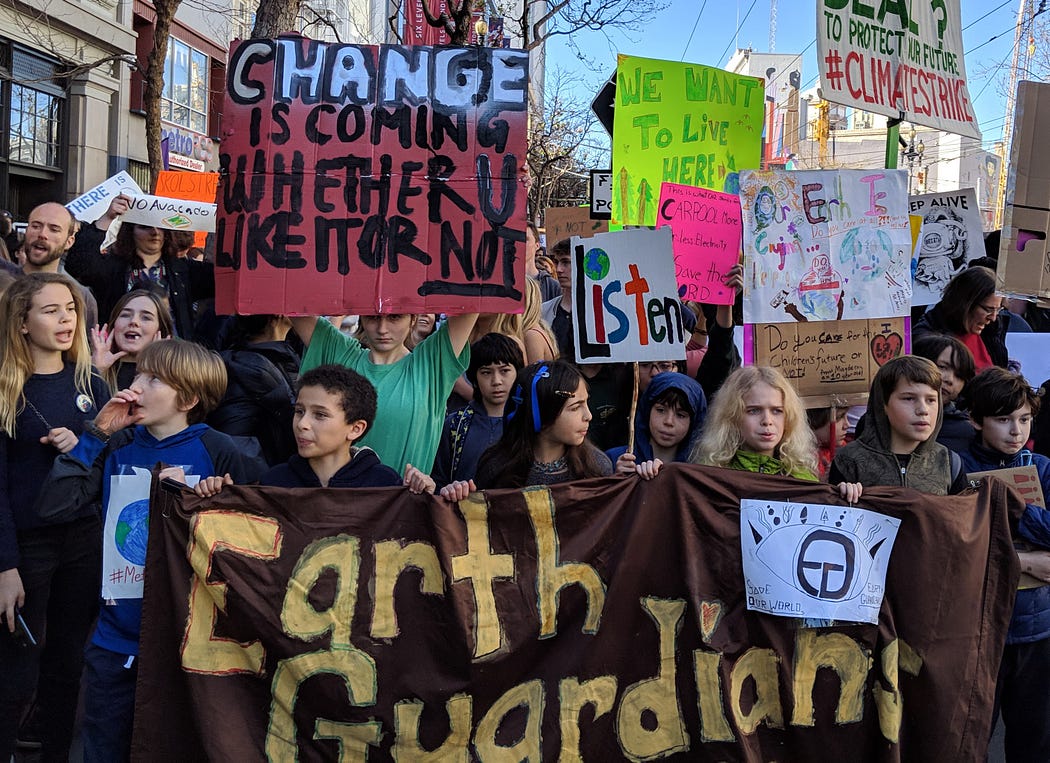
To be sure, the conditions for organizing a climate strike are not ideal. Many of our movements are on the defensive, facing down new attacks from the Trump administration at every turn. The organizational infrastructure to support massive direct action is relatively weak right now and September is only two months away. But time is running out and the climate crisis is on our doorstep. The conditions for organizing are only going to get more and more challenging in the months and years to come. Young people around the world have challenged all of us to take bold direct action to turn the political tides and seriously confront the climate crisis. Their visionary leadership has created the momentum and opportunity we need to take serious action for climate justice. This September, let’s give it a shot. Let’s go big and strike for climate justice.

 

This Fall, Let’s Throw Down For Climate Justice

Time is running out. The climate crisis is at our doorstep. Communities around the world are already being battered by the earliest effects of the changing climate–superstorms, floods, wildfires and droughts. And still not moving any closer to actualizing the dramatic transformation of our energy systems and economy that we all know are needed to mitigate the worst effects of climate change. 

The situation is bleak, but we are hopeful. 

Around the world, people are stepping up to take bold direct action to confront the climate crisis. Hundreds of thousands of school students are organizing climate strikes, Indigenous communities are continuing to resist the destruction of their historic lands, new movements like Extinction Rebellion are organizing bold and dynamic actions across the planet, and our comrades from Ende Gelande in Germany recently visited to teach us how they mobilized massive direct actions confronting the fossil fuel industry. 

We’re also hearing from a lot of groups who are making big plans to throw down hard for climate justice this fall. Starting on September 20, the students who have been organizing the weekly climate strikes are launching a major strike and week of actions. Then starting on September 27th, Earth Strike is calling for a general strike demanding immediate climate action from governments and corporations worldwide.  WeRise2020, a widespread network of climate action groups across Europe is planning on mobilizing alongside EarthStrike starting on September 27th for four to six weeks of escalated actions before pausing to regroup for another wave of action. We’re also hearing that the folks at Extinction Rebellion are working on plans for something big this fall and the UN Climate Action Summit in New York City starting on September 23 offers an obvious venue for confronting political leaders for their failure to take meaningful action to address the climate crisis.  

It’s still too early to tell how this is all going to play out but we’re excited to see the energy and activity and we’re ready to throw down. Nobody can afford to sit on the sidelines–the stakes are too high. 

We know that the scope and the urgency of the climate crisis demands bold action and we’re inspired to see so many people–and so many new voices–thinking big. We are excited to see people thinking about mobilizing to create serious disruption to the systems that are perpetuating our reliance on fossil fuels and to see people talking about organizing protracted surges of resistance, not just self-contained actions. We’re hopeful that our movements will use this wave of energy to directly confront the root causes of the climate crisis–capitalism, colonialism, and white supremacy–and to reject market-driven false solutions. 

In the coming weeks and months we’ll be keeping our ears to the ground to find ways that we can plug in. We’ll be checking in with old friends and hopefully hearing from new friends about what folks are planning and where we can show up in the best ways. We’ll be sharing some of our ideas about how we think our movements can make fall 2019 a turning point in the movement for climate justice and we’ll be listening carefully to learn from the other new ideas that are emerging.

Time is running out and the stakes couldn’t be higher. Let’s keep this conversation going, let’s work together to build momentum, and let’s get ready to throw down hard this fall. 


Rising Tide is an international, all-volunteer, grassroots network of groups and individuals who organize locally, promote community-based solutions to the climate crisis and take direct action to confront the root causes of climate change. Want to get involved or continue the conversation? Email us at networking@RisingTideNorthAmerica.org


Eight Arrested in a Violent Show of Force by Police in Nonviolent Protest of Proposed Utah Inland Port in Salt Lake City

photo credit: Laura Borealis

Eight Arrested in a Violent Show of Force by  Police Department in Nonviolent Protest of Proposed Utah Inland Port at Salt Lake City and County Building

Impacted Community Members, Indigenous Leaders, & Environmental Activists Call Out Devastating Impacts of the Inland Port on Public Health, Wildlife Habitats, and Future of Our Planet

Contact: Mariella Mendoza, 801.410.0225, ella.mendoza.cardenas@gmail.com

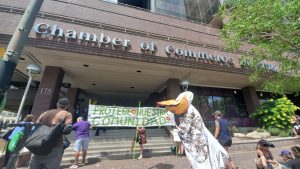
SALT LAKE CITY, UTAH – Eight people were arrested and several received a citation at the Salt Lake Chamber of Commerce in nonviolent resistance to the proposed Utah Inland Port this afternoon. The protest was a collaboration between the national Earth First! movement and local Utah organizations ICE Free SLC, Civil Riot, the Rose Park Brown Berets, Canyon Country Rising Tide, Utah Against Police Brutality, and Wasatch Rising Tide. A group of five people locked themselves together in the offices of the Chamber of Commerce while people gathered inside and outside of the building chanting and singing in support. Police were called to the scene and responded to the crowd of mostly youth with a violent show of force, shoving people out of the building, grabbing and jostling people, and even punching some people in the face.

The activist groups organized the action and adjacent rally to raise awareness of the devastating public health impacts of the proposed inland port, and its inherent environmental racism and classism, particularly to the communities surrounding the 16,000 acres set aside for the project. These neighborhoods include Rose Park, West Valley City, and Poplar Grove–communities of predominantly poor and low-income Latinx, white, and other people of color who already experience disproportionate pollution, policing, and other forms of disenfranchisement.

“Nonviolent direct action can shine a light on the grave injustice being done by the powerful elite with this destructive development, through the harm it will cause to the surrounding communities, wildlife habitats, and the planet,” said Adair Kovac, one of the protesters and a member of civil resistance group Civil Riot. “The violent response from the police yet again proves that law enforcement serves and protects the wealthy and their property and interests, not the majority of people.”

Grounded in a tradition of Indigenous resistance and Civil Rights movements, the action was an escalation of attempts made by impacted community members to reach Derek Miller, chairman of the Utah Inland Port Authority board, and other wealthy, politically connected stakeholders who support the port. Participants in the action have also testified at public hearings, submitted written comments, and supported the civil suit filed against the port by Salt Lake City Mayor Jackie Biskupski.

“As Chair of the Port Authority Board, and President of the Salt Lake Chamber of Commerce, Derek Miller has been an enthusiastic supporter of the proposed polluting port. Among the more troubling aspects of his cheerleading is his refusal to acknowledge the harm it will cause, and his habit of dismissing community concerns,” said representatives from Canyon Country Rising Tide.

photo credit: Laura Borealis

Research shows that sea ports and inland ports are enormous emitters of pollution. Ports run on diesel, and diesel emits tons of pollution. Salt Lake City already fails to meet federal air quality standards, and air pollution has led to an increase in health problems and even death of vulnerable community members.

“Historically, communities of color and immigrants on the West Side of Salt Lake have experienced much of the violence committed by the financial and political elite of Utah. Through processes of racist policing, gentrification, deportation, red-lining, and labor abuse, the west side has been continuously exploited for the benefit of those who do not live in our communities,” said Ella Mendoza. “The Inland Port represents a strategic assault on this community, as it is dependent on their displacement and suffering in order to function. Our communities continue to fight back against the racist, exploitative, and oligarchic systems that drive this terror, from the border to the Inland Port.”

The proposal also includes 10,000 acres of undeveloped wetlands adjacent to the Great Salt Lake – and landing place for over 10 million migratory birds each year whose habitat would be disrupted by the air, noise, and light pollution. And based on statements made by the Port Authority Board members who are legislators, the legislation just passed to expand the port authority’s jurisdiction is intended to create fossil fuel transloading hubs in rural communities, which would negatively impact air and water quality in these communities and further incentives to continue chipping away at Utah’s public lands, leading to an increase in fossil fuel-based greenhouse gas emissions.

“We are demanding that the Utah Inland Port project be canceled immediately and that anti-racist, sustainable rewilding alternatives be developed and managed by local communities,” said Eliza Van Dyk, an organizer with Wasatch Rising Tide. “If the polluting port is constructed, Derek Miller will be contributing to climate chaos, sacrificing the future of young people across Utah, and worsening structural and environmental racism in the Salt Lake Valley.

The protesters also drew connections between the development proposal–which is being messaged as an economic opportunity by the state of Utah, Salt Lake City and County councils, CBRE, Rio Tinto, Envision Utah, Savage, the Chamber of Commerce, and others–and the history of colonial violence by white settlers who dispossessed the Ute, Shoshone, and Goshute tribes of their ancestral lands and wreaked havoc on the web of life.

There is little time left for a just transition to a society that respects the planet’s limits and acknowledges the dignity of all beings. People are reclaiming their power and challenging the state and private actors driving our species toward extinction. We will defend our communities. “Our community is rising. Derek Miller and this illegitimate board have the option to stop contributing to climate catastrophe or to confront popular power,” said Maura Sanchez, an organizer with Civil Riot.

Livestream of Action: https://www.facebook.com/CivilRioters/videos/763576204037565/

Photos/Video: http://bit.ly/2YIYfdF

###

They Saved Tens of Thousands of Lives, Then They Lost Their Jobs

Source F&WW Twitter Feed

cross-posted from Medium

They Saved Tens of Thousands of Lives, Then They Lost Their Jobs

This isn’t what a just transition looks like

by Patrick Young

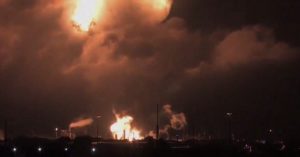
At around 4 am on Friday, June 21, a massive fire and explosion rocked Alkylation unit at the Philadelphia Energy Solutions refinery in South Philadelphia. The explosion was so powerful that it shook houses and apartment buildings around West Philadelphia. The ball of fire could be seen for miles, turning the predawn sky orange. As the fire raged, while every human instinct must have screamed to run away from the fire, members of the PES Emergency Response Team (ERT) dropped everything to run toward the fire. They battled the blaze for hours and by 10 am the fire was contained but still burning.

Like anyone who is familiar with refinery operations, Jim Savage, an operator at PES and a union activist immediately turned his thoughts to the ERT writing, “Huge props to our refinery Emergency Response Team. I’ve always questioned their sanity, but their courage and professionalism has never been in doubt. Those explosions were terrifying and I have no idea how we didn’t have injuries or even worse. It’s going to be a long and dangerous day for them, so keep them in your thoughts.”

It took a full day to fully extinguish the fire. The explosion was bad, but it could have been much, much worse. Unit 433, the Alkylation unit where the explosion occurred used hydrofluoric acid (HF) as part of the refining process. HF is by far the most dangerous chemical in the facility and PES’s most recent emergency response plan reported that there were as many as 71 tons of the chemical at the facility. Just after the explosion, the operator on the board at the refinery’s central control room transferred the HF that was in process to another container, preventing a mass release of the chemical.

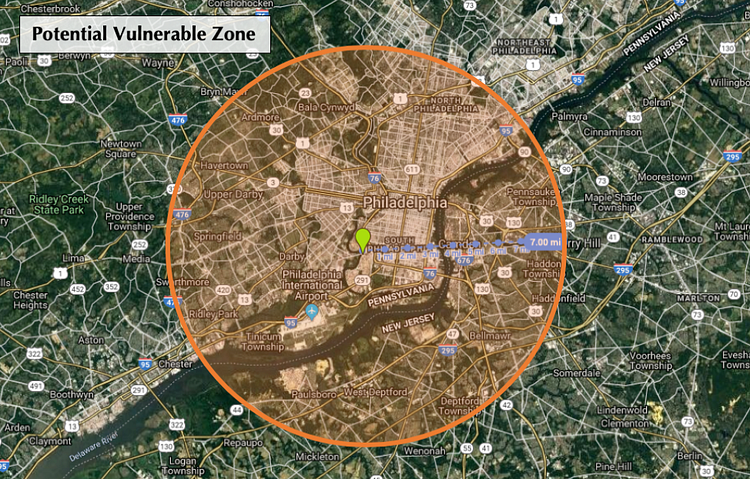
Hydrofluoric acid is an incredibly dangerous chemical used as a catalyst in some oil refineries (there are inherently safer technologies in use in many refineries but owners of many older refineries, including the PES facility in South Philadelphia have refused to invest in safer systems). HF quickly penetrates human tissue, but it interferes with nerve function so burns may initially not feel painful, giving people a false sense of safety. Once it is absorbed into the blood through the skin it reacts with calcium and can cause cardiac arrest. It volatilizes at a relatively low temperature and travels as a dense vapor cloud — PES reports that the supply of HF stored at the South Philadelphia refinery could travel as far as 7 miles putting as many as a million people at risk.

On June 21, the members of United Steelworkers Local 10–1 on the PES Emergency Response Team and in the refinery’s control room prevented the dozens of tons of HF at the refinery from being released saving tens of thousands of lives.

Then on June 26th, those workers learned that they were losing their jobs. Philadelphia Energy Solutions announced that it was shutting down refinery operations and laying off nearly all of the workers at the refinery within weeks.

Declaring Victory

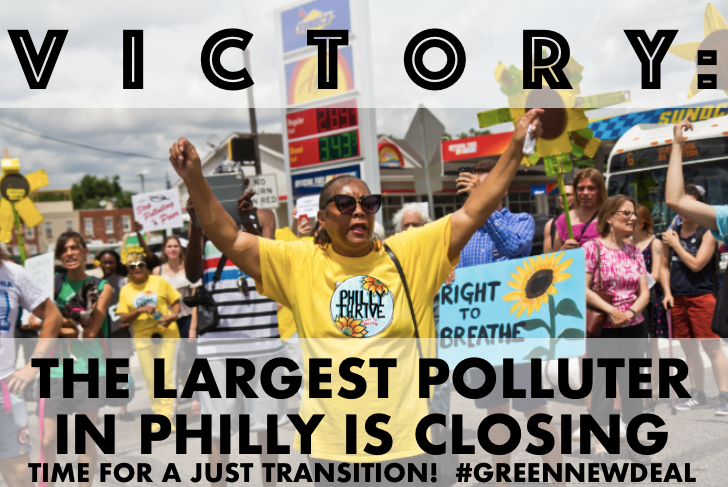
Philly Thrive, a local environmental group that had been organizing against the refinery for years immediately declared victory, changing the cover photo on its Facebook page to an image with the words “Victory: The largest polluter in Philly is closing” and, in much smaller letters, the words “time for a just transition! #GreenNewDeal.”

To their credit, Philly Thrive did issue a longer written statement on the closure laying out a more detailed set of demands for remediating the site and ensuring that workers’ pensions and healthcare were paid for. But that statement seemed to fall flat with the 1,000 workers — many of whom had just risked their lives to prevent a catastrophe and save tens of thousands of lives — who saw Philly Thrive proudly declaring victory right after they learned that they were losing their jobs.

Philly Thrive Declares Victory. Source: Philly Thrive Facebook Page

Tonight, there are a thousand families that are wondering what their futures will look like after the refinery closes. At PES, because of years of union struggle in the oil refining sector, those workers pulled in good, family-sustaining wages. They could own homes, send their kids to college, and plan for a comfortable retirement. But many of their skills are not immediately transferrable to other jobs, and the jobs that are available are largely non-union and pay half of what workers at PES were earning.

This isn’t what a just transition looks like

While the shutdown of the South Philadelphia refinery is unlikely to have any impact on fossil fuel consumption in the eastern United States in the short term — imports of refined gasoline and home heating oil will make up for the lost production — there is a scientific consensus that if we are to have any chance at averting the catastrophic changes in our climate that we are experiencing, we need to rapidly transition away from fossil fuels and other greenhouse gases.

Any sort of transition away from the fossil fuel economy will almost certainly be painful for the hundreds of thousands of workers currently employed in the sector. And there probably is no scenario where the majority of workers would in the fossil fuel industry would enthusiastically embrace such a dramatic change. But abruptly laying off the workers who just ran towards — not away from — danger and saved tens of thousands of lives is probably one of the most unjust transitions those workers could expect to face. Philadelphia Energy Solutions management apparently went as far as violating the federal WARN act by failing to give many of the workers 60-days-notice before unceremoniously escorting them out of the refinery carrying cardboard boxes containing their personal belongings.

When talking about plant closures and job loss, the climate movement often talks about a just transition. Interestingly, the idea of a ‘just transition’ isn’t an idea to come out of the environmental or climate movement. The term was coined by Tony Mazzocchi, a leader in the Oil Chemical and Atomic Workers (a predecessor of USW Local 10–1). In the early 1990s as the evidence that carbon in the atmosphere was contributing to climate change, Mazzocchi recognized that although it would be painful for workers, we would soon need to transition our economy away from fossil fuels. He said, “there is a Superfund for dirt. There ought to be one for workers,” proposing significant public investment to support fossil fuel workers who were transitioning out of the fossil fuel industry. When environmental partners suggested that the Superfund for Workers had too many negative connotations, Mazzocchi changed the name of his proposal to a Just Transition.

Since 1993 the term “just transition” has gained traction in much of the climate movement and in parts of the labor movement. While many are comfortable with using it as a vague catch-phrase, workers who are facing job loss have found some urgency in becoming much more specific about exactly what a just transition will look like. In the lead up to the 2015 UNFCCC talks in Paris, the International Trade Union Confederation published a five-point framework for what a just transition means:

1. Sound investments in low?emission and job-rich sectors and technologies. These investments must be undertaken through due consultation with all those affected, respecting human and labour rights, and Decent Work principles.

2. Social dialogue and democratic consultation of social partners (trade unions and employers) and other stakeholders (i.e. communities).

3. Research and early assessment of the social and employment impacts of climate policies. Training and skills development, which are key to support the deployment of new technologies and foster industrial change.

4. Social protection, along with active labour markets policies.

5. Local economic diversification plans that support decent work and provide community stability in the transition. Communities should not be left on their own to manage the impacts of the transition as this will not lead to a fair distribution of costs and benefits

The shutdown of the South Philadelphia refinery was not preceded by investment in clean energy jobs (Principle 1) or early warning, training and skills development (Principle 2). Social protections have failed workers in Philadelphia as many were not even given the federally-required 60-day WARN notices and payments (Principle 4) and this shutdown comes at a time when the Philadelphia government is pushing expansion in an east-coast energy hub, not supporting local economic diversification (Principle 5). While environmental activists from organizations like Philly Thrive have issued sweeping demands for comprehensive transition programming there does not appear to be any indication that workers at the refinery were meaningfully involved in the crafting of that platform (Principle 2).

The shutdown of the South Philadelphia refinery failed badly on all five of the ITUC’s Just Transition Principles.

Where to go from here

The situation in South Philadelphia is bad and there isn’t anything that is going to make things okay for the 1,000 workers and their families who are struggling to imagine what their futures might look like. There are, however, some things that could help keep the situation from getting worse.

Everyone in the environmental community who celebrated the closure of the facility should be ready to campaign just as hard to demand that the Carlyle group, Energy Transfer Partners and PES’s other investors aren’t able to make off with the $1.25 billion insurance payments the company is poised to collect in the aftermath of the explosion just to leave workers and the community holding the bag. Workers and the community need to be first in line to collect whatever is left over to provide severance, healthcare, and to clean up the site that has been badly contaminated by over 150 years of oil refining.

Right now there is no superfund for workers, but there is a transition program that can be adopted for these workers. Because the lost production at the South Philadelphia refinery will be replaced with refined gasoline and home heating fuel imports, workers at the facility should be eligible for TAA benefits, which could provide urgently needed funds to support job retraining and extended unemployment. Supporting workers’ TAA petition should be a top priority of anybody who is concerned about a just transition at this facility.

Going forward, bold proposals like the Green New Deal start the ball rolling on an incredibly important discussion about building the clean energy infrastructure that we need to have a just transition away from fossil fuels. But we need to make sure that the workers and communities who are at the front lines of this transition are not left behind and have an opportunity to be a core part of the process. The workers at the South Philadelphia refinery risked their lives and saved thousands of lives on June 21. They didn’t cause that disaster and they deserve a much more just transition.